Sakeef M. Karim
  • CV
  • Research
  • Teaching
    • Social Research (SOCI 316) at Amherst College
    • Introduction to Quantitative Sociology (SOCI 269) at Amherst College
    • Assimilation & Cultural Change (SOCI 231) at Amherst College
    • The Ascendant Far Right (SOCI 229) at Amherst College
    • Sociology for Troubles Times (SOCI 140) at Amherst College
    • PopAging DataViz—UK at the University of Oxford

Research

❧

Navigate the tabs below to get a better sense of my research program — including published research, (select) work in progress, and papers that have temporarily been cast aside, hopefully to resurface in the near future.

2024

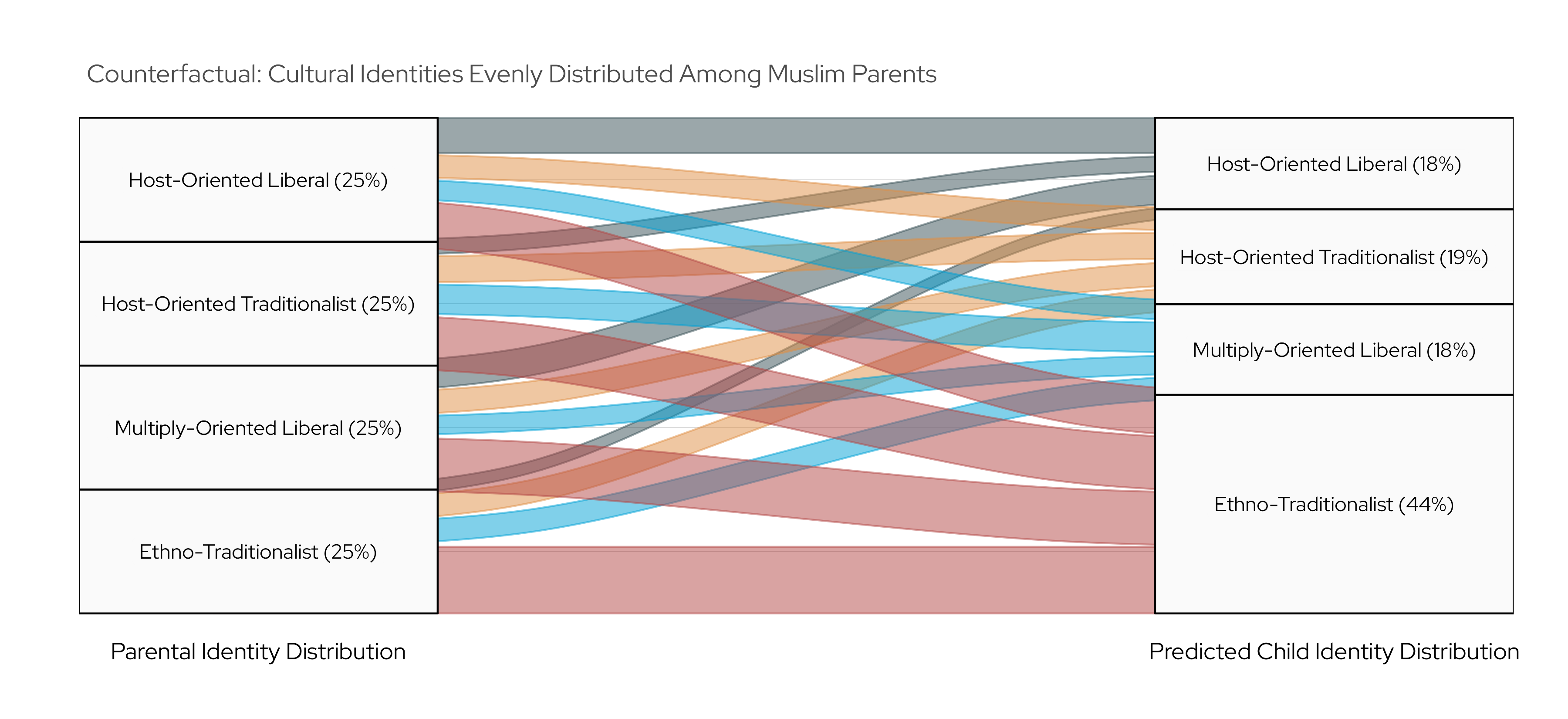
Islam and the Transmission of Cultural Identity in Four European Countries

Social Forces

Studies exploring the integration of European immigrants tend to find cultural gaps between Muslim children and their peers. While some scholars argue that parent-to-child transmission is a key mechanism underlying this pattern, others privilege extrafamilial explanations by pointing to differences in cultural values within Muslim households. In the present study, I argue that these mixed results stem from a tendency in the literature to analyze distinct components of personal culture in isolation from cognate dimensions. To address this shortcoming, I use multigroup latent class models to explore how a wide range of attitudes (tapping ethnocultural identity, gender norms, sexual liberalism, and perspectives on integration) are clustered together in disparate regions of the belief space, marking distinct cultural identities. Then, I fit a series of logistic regressions to map how these cultural identities are distributed among immigrant-origin samples in four European countries and transmitted across generational lines. Ultimately, I arrive at the following conclusion: while Muslim youth stand out from their peers vis-à-vis their cultural identity profiles, there is little evidence to suggest that this pattern is decisively shaped by parent-to-child transmission.
2024

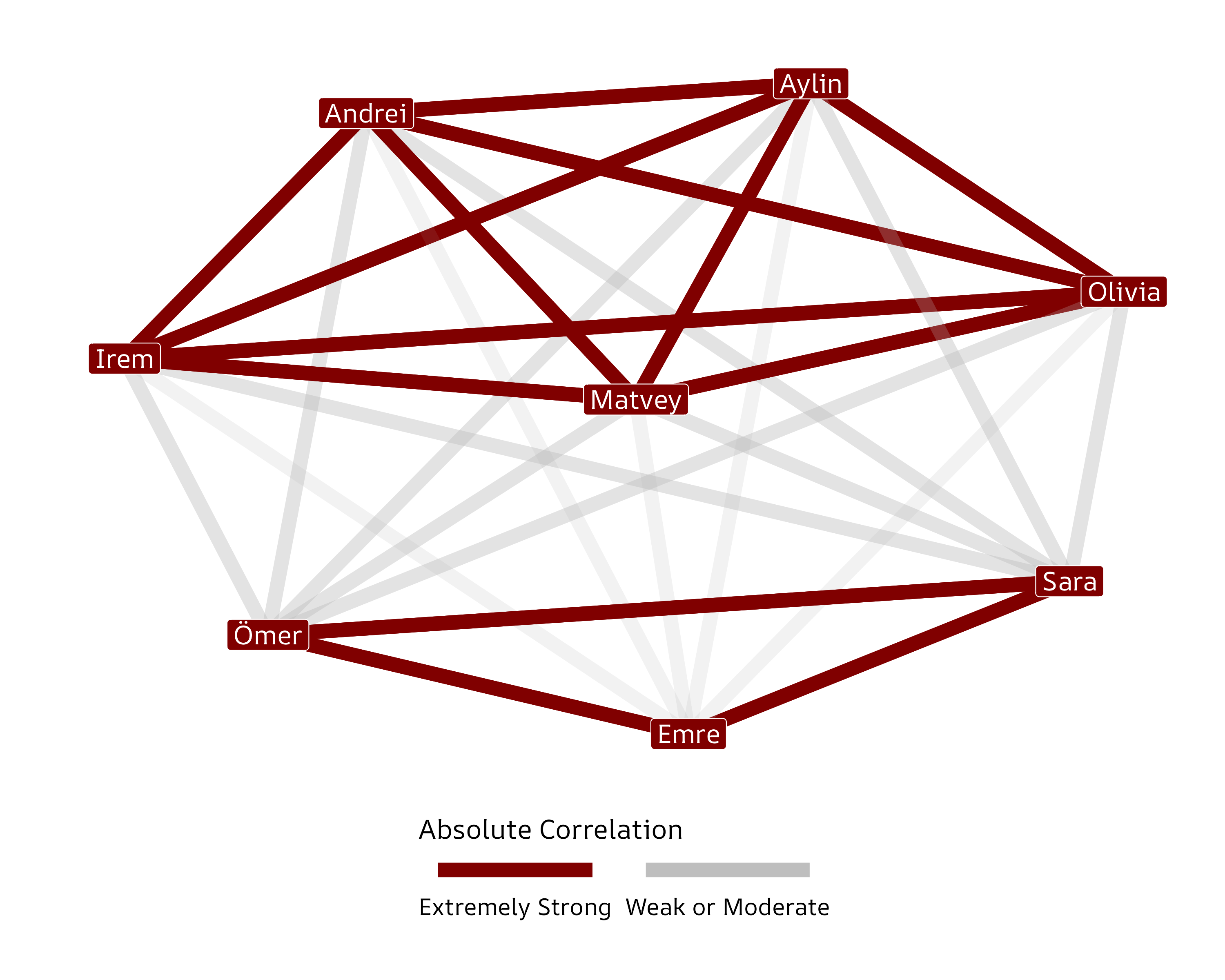
The Organization of Ethnocultural Attachments Among Second-Generation Germans

Social Science Research

Recent research suggests that two ethnocultural “identities”—such as ethnic identity or national identity—can be compatible (positively correlated) or in conflict (negatively correlated) within and across immigrant-origin groups. In the present article, I advance a more cognitively oriented framework for using correlational patterns to map how immigrant-origin people organize their attachments to a variety of ethnocultural categories. In explaining the value of this framework, I embark on a multistage empirical illustration. First, I perform a correlational class analysis (CCA) using a sample of second-generation Germans and a vector of 13 identity-related indicators. Second, I use a series of linear regressions and a descriptive visualization to clarify the results of my CCA. Third, I fit two multinomial logistic regressions that demonstrate how social attributes—and specifically, religion and ethnicity—impose constraints on the latent schemes that second-generation Germans follow to organize their ethnocultural “identities.”
2021

How Legacies of Geopolitical Trauma Shape Popular Nationalism Today

American Sociological Review ❧ with Thomas Soehl

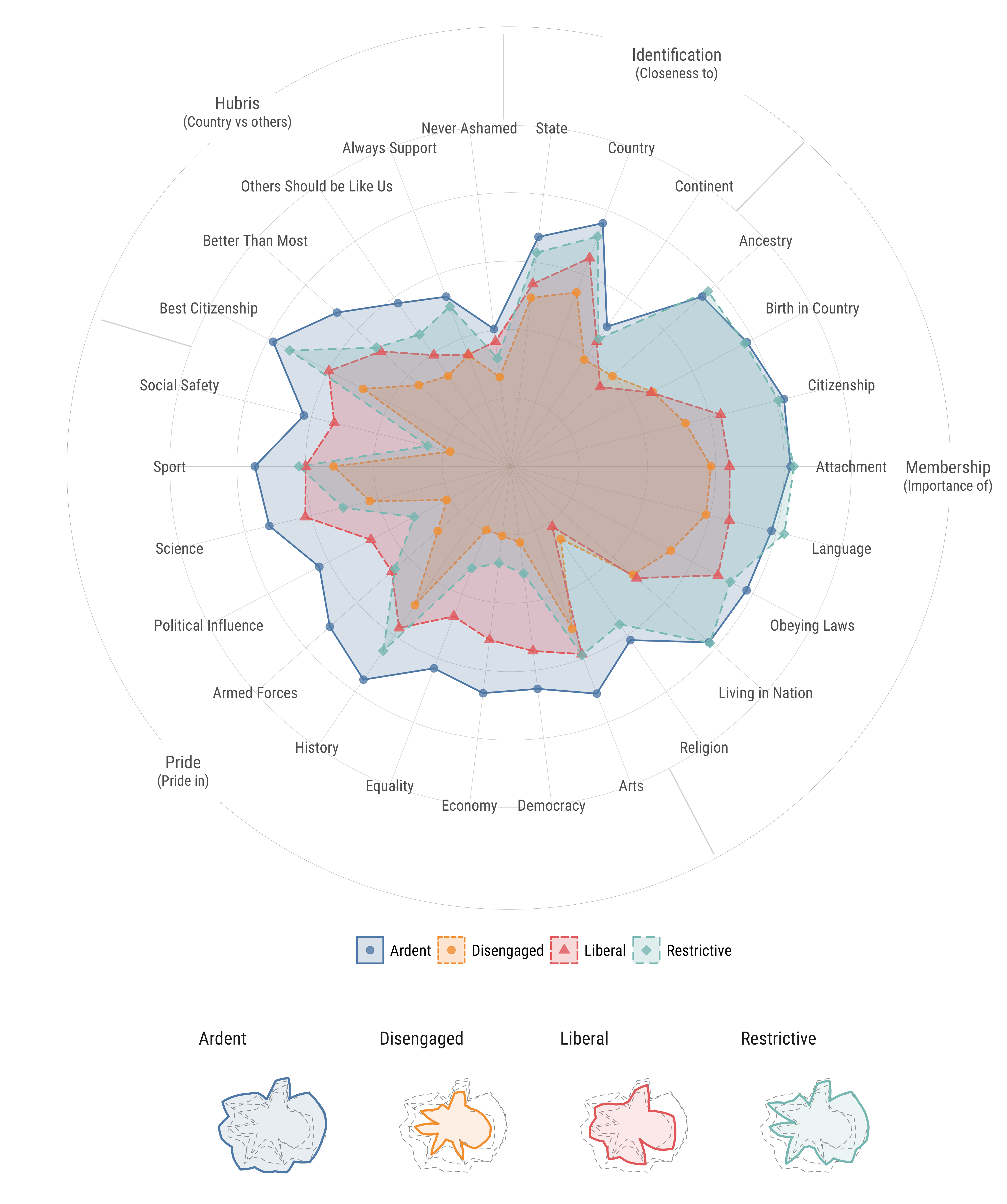
Geopolitical competition and conflict play a central role in canonical accounts of the emergence of nation-states and national identities. Yet work in this tradition has paid little attention to variation in everyday, popular understandings of nationhood. We propose a macro-historical argument to explain cross-national variation in the types of popular nationalism expressed at the individual level. Our analysis builds on recent advances on the measurement of popular nationalism and a recently introduced geopolitical threat scale (Hiers, Soehl, and Wimmer 2017). With the use of latent class analysis and a series of regression models, we show that a turbulent geopolitical past decreases the prevalence of liberal nationalism (pride in institutions, inclusive boundaries) while increasing the prevalence of restrictive nationalism (less pride in institutions, exclusive boundaries) across 43 countries around the world. Additional analyses suggest the long-term development of institutions is a key mediating variable: states with a less traumatic geopolitical history tend to have more established liberal democratic institutions, which in turn foster liberal forms of popular nationalism.

What is Americanness? Polarization and Consensus in Cultural Logics of the American Creed

Revise & Resubmit ❧ with Keitaro Okura

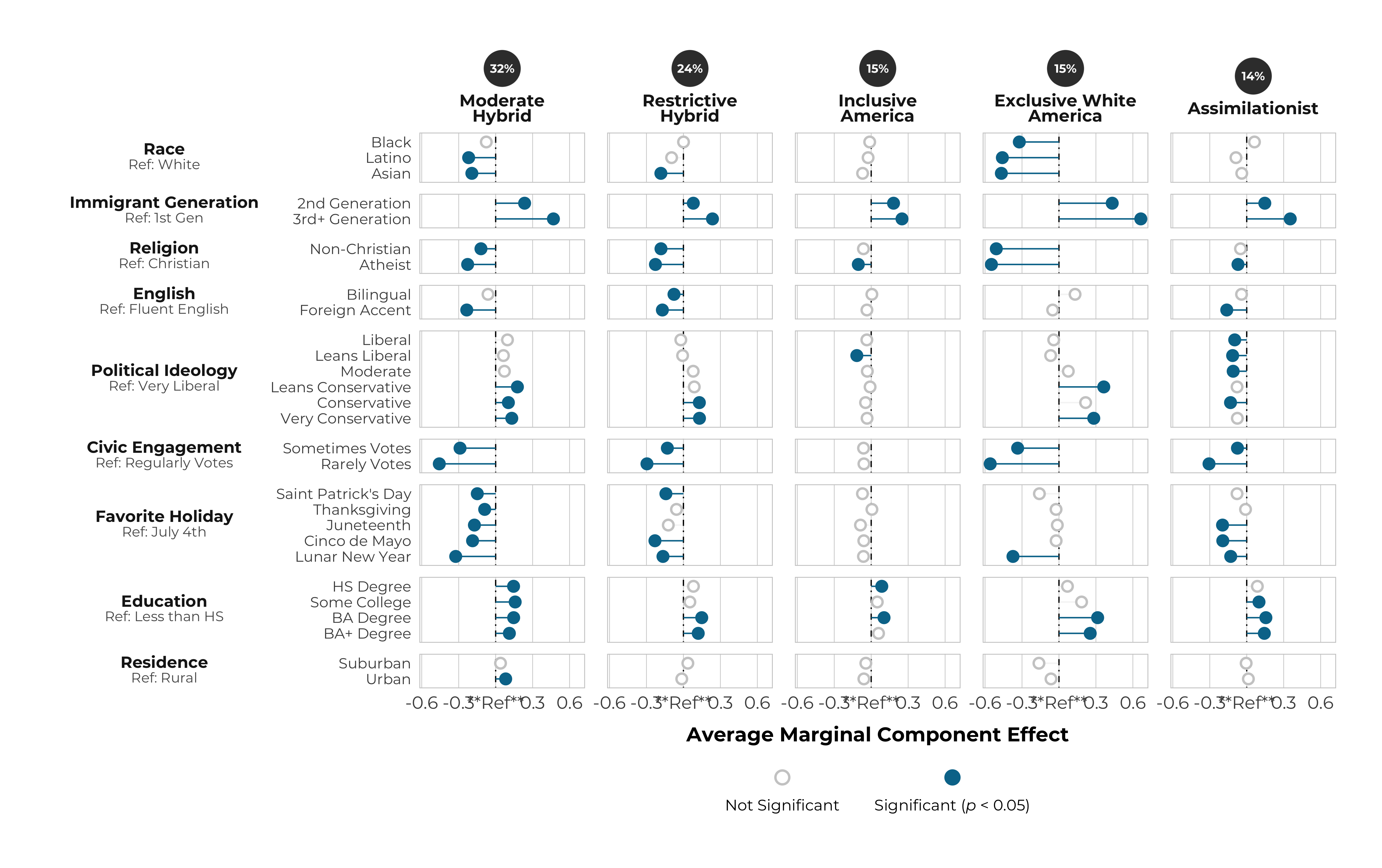
Conventional wisdom suggests that political polarization has fractured the boundaries of U.S. national membership. Employing a novel empirical strategy that applies latent class modeling to conjoint data, we find evidence that both supports and complicates this narrative. On one hand, we identify five cultural logics of Americanness, three of which exhibit strong partisan alignment and represent sharply divergent conceptions of national belonging. On the other hand, we find that a majority of Americans, both Democrats and Republicans, subscribe to hybrid conceptions of Americanness that incorporate both civic-oriented norms and ethnocultural criteria. We further find that attributes such as a college education and a multigenerational family history in the U.S. are associated with greater Americanness across all five cultural logics. These findings reveal substantial cross-partisan consensus on the contours of authentic national belonging, even within a fragmented media landscape that systematically exposes partisans to divergent information environments. One implication of our findings is that contemporary partisan conflict over what it means to be American reflects not only competing understandings of Americanness, but also contestation over who legitimately adheres to the national creed.

The Intergenerational Transmission of Majority-Group Ties and Their Political Consequences

Revise & Resubmit

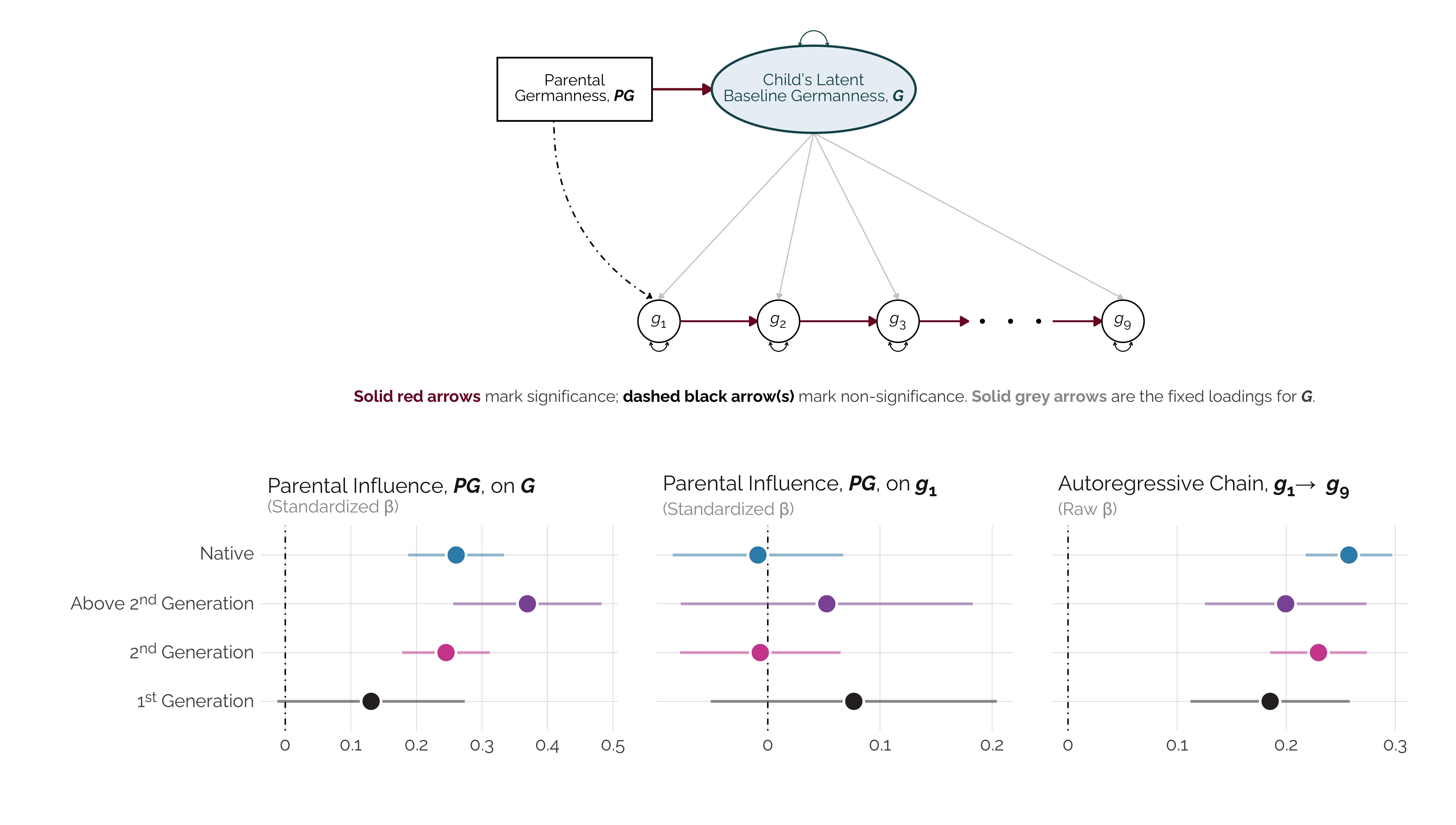
In this study, I highlight an underappreciated catalyst for political socialisation in immigrant societies—the intergenerational transmission of majority ties. Drawing on nine waves of German panel data from the Children of Immigrants Longitudinal Survey in Four European Countries (2011–2022), I demonstrate that the “Germanness” of parental networks shapes youth respondents’ majority-group ties in adolescence, and illustrate how these social inheritances influence the Germanness of adolescent networks during the transition to early adulthood. By Wave 9, when most respondents are in their late 20s, the Germanness of social networks is closely linked to political preferences: native majorities with more German-centric networks are less likely to support left-wing parties, while the inverse is true for most of their immigrant-origin peers. These patterns reflect distinct but complementary mechanisms: for immigrants and their descendants, majority ties signal structural assimilation into “mainstream” political culture and convergence with liberal-cosmopolitan norms; for natives, ethnically diverse social networks reinforce enculturation into progressive political communities. Overall, these findings show that political socialisation operates not only through the transmission of beliefs and cultural orientations, but through the concomitant reproduction of relational environments.

Culture War and Interpretive Contestation: Lay Theories of the ‘Woke’ Phenomenon in the Mass Public

In Preparation ❧ with Miloš Broćić

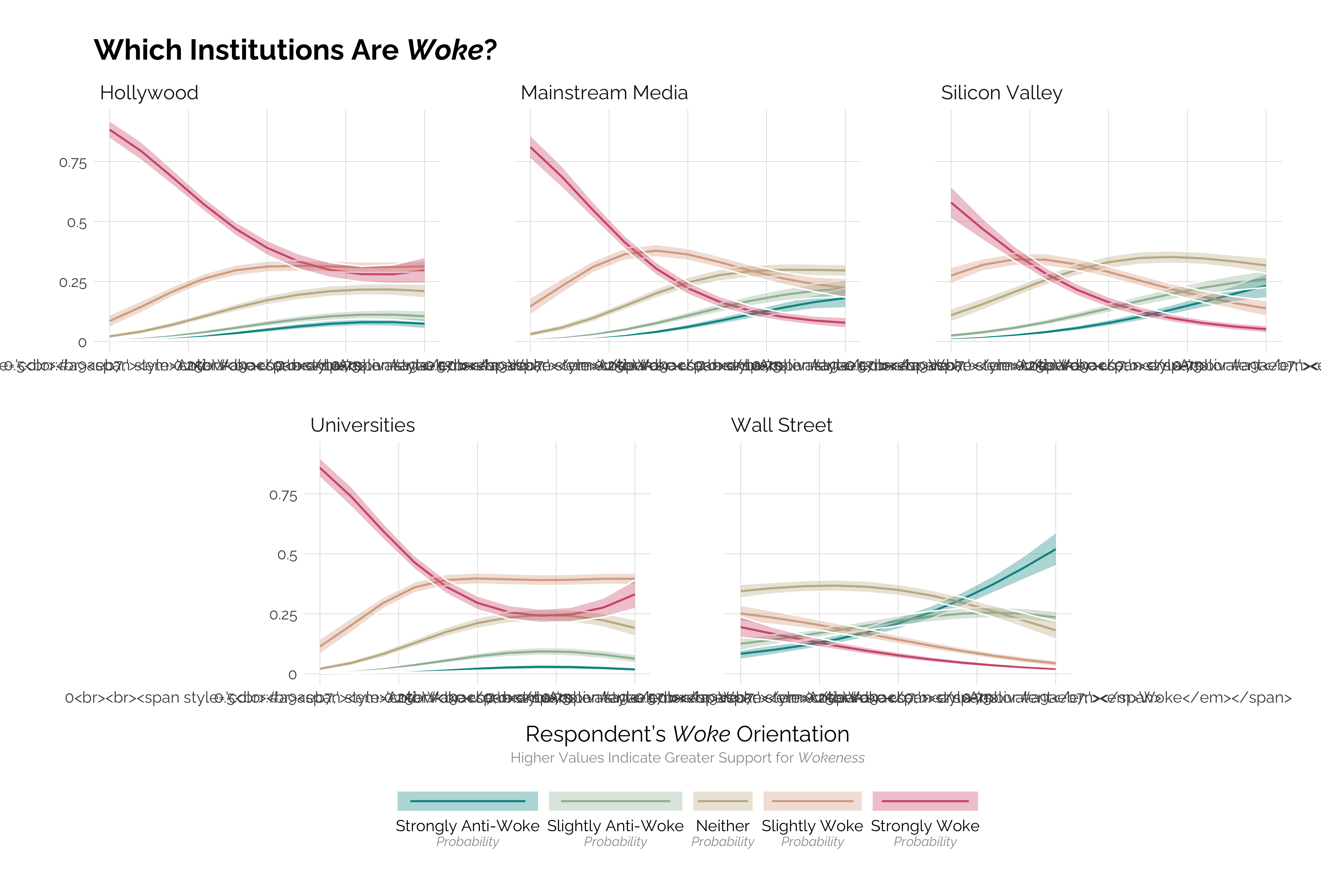
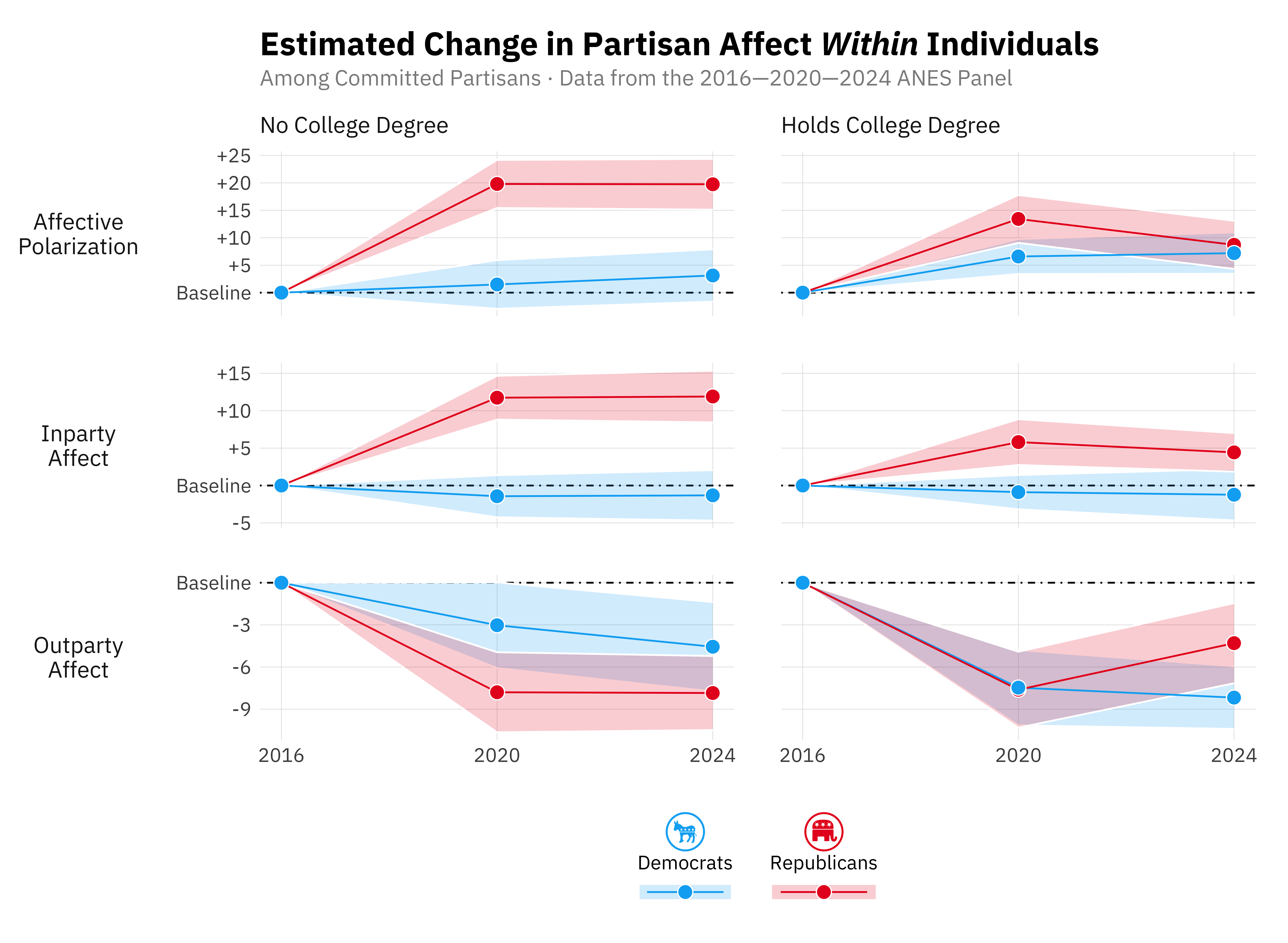
In contemporary democracies, political divisions unfold through competing symbolic narratives organizing how conflict itself is understood. Yet how ordinary citizens interpret these collective representations—and the role these contestations play in shaping political polarization—remains underspecified. Building on recent calls to study interpretive heterogeneity, we analyze lay theories of the ‘woke’ phenomenon as a strategic case for understanding interpretive struggle in culture war conflict. Using an original survey of over 3,000 respondents, we map how ordinary Americans define, classify, and account for woke, and how these differ according to their evaluative stance. We find substantial interpretive heterogeneity, with citizens constructing oppositional narratives that sharply align with partisan orientations. At the same time, interpretive heterogeneity does not reflect wholesale intersubjective breakdown or the collapse of a shared reality. Respondents with varying affinities for woke exhibit some convergence on second-order understandings of how others use the term. Moreover, partisans draw on similar implicit logics in structuring their accounts—attributing legitimacy to bottom-up public grievance and illegitimacy to elite imposition—even as they apply them to different social ontologies. Finally, being engaged with the woke interpretive frame predicts affective polarization above and beyond issue positions and political ideology, particularly among Republicans. Together, these findings suggest that culture war conflict is not simply the symbolic terrain of elite discourse but is also energized by lay interpretive struggles over collective representations that are widely shared yet deeply contested.

A Relational Framework for Exploring Parent-Child Cultural Similarity in Immigrant Societies

In Preparation

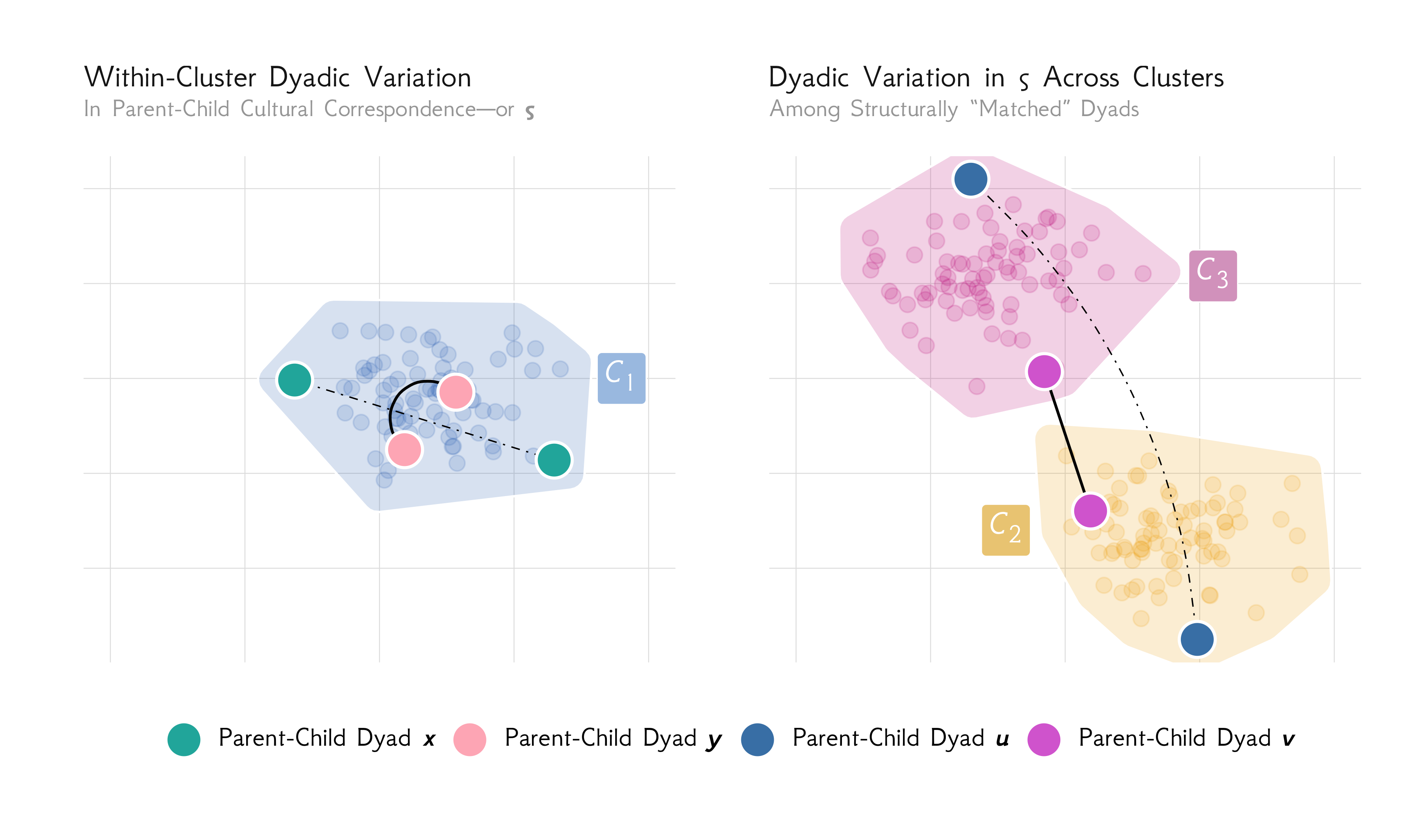
How can researchers use dyadic surveys to quantify the extent to which an individual’s belief patterns map onto the cultural dispositions of their parents? I propose a multistage relational framework for addressing this question. Specifically, I show how simple, distance-based procedures commonly used in machine learning settings can be harnessed to develop intuitive measures of parent-child cultural similarity in a multidimensional feature space bounded by a vector of theoretically relevant inputs. In developing this argument, I draw on dyadic, parent-adolescent data across four immigrant societies in Europe as well as non-parametric algorithms and regression techniques. Using these instruments, I illustrate how religious affiliation is associated with parent-child cultural similarity and assess whether cultural correspondence in adolescence predicts political orientations in early adulthood. While this study is inspired by questions of interest to migration scholars, the framework proposed herein is relevant for any analysis scrutinizing parent-child cultural correspondence.

Democratic Strain and Populist Fervor in India, America and Beyond

On Hold ❧ with Alessandro Giuseppe Drago

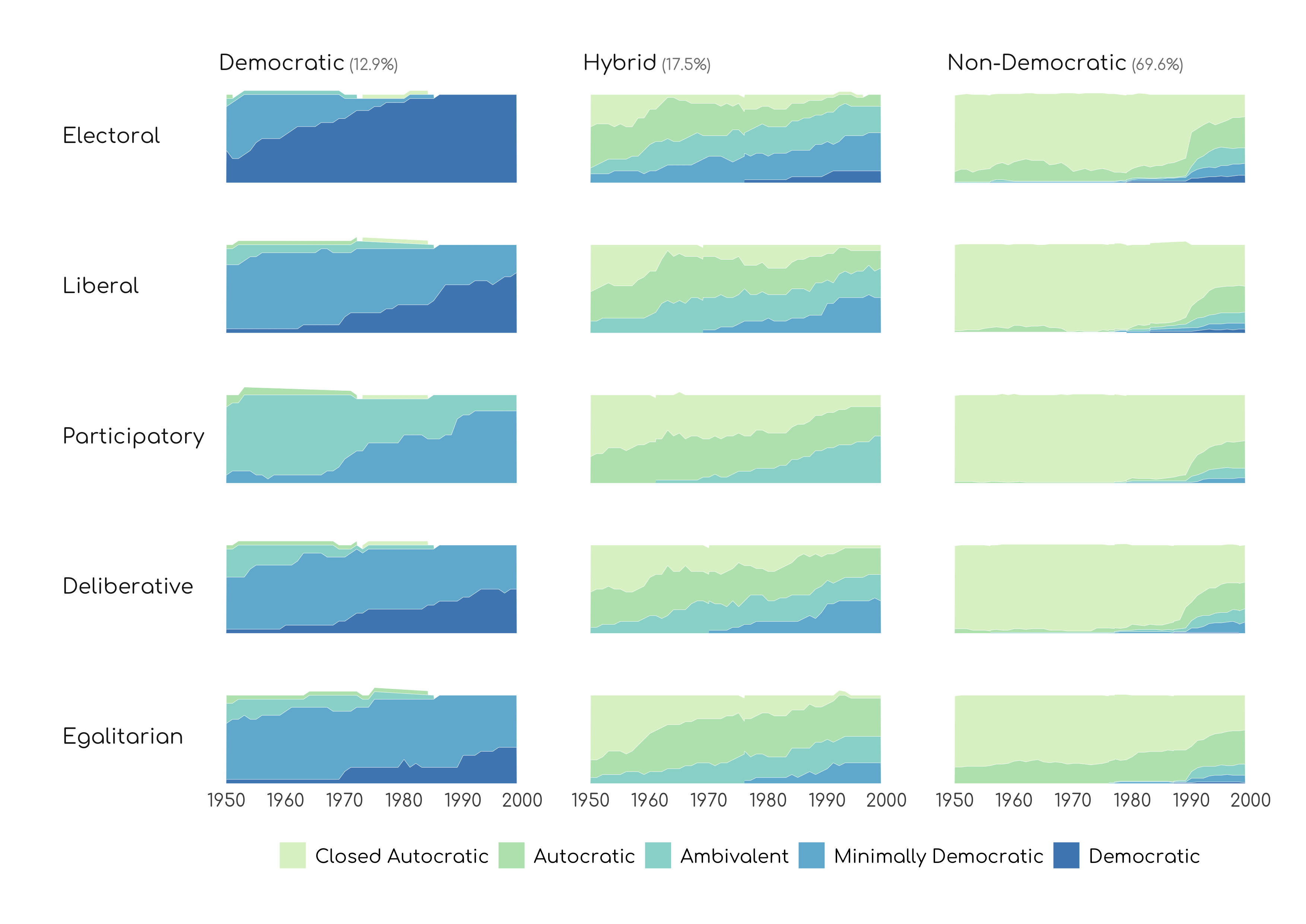
What is the relationship between democracy and populism? In the present article, we develop an explanation that highlights the role of democratic strain (i.e., the distance between formal and deep democracy) as well as democratic legacies in all corners of the modern world. To evaluate this explanation, we blend quantitative and qualitative approaches to macro-comparative research. Using sequence analysis, regression analysis, and a qualitative comparison of India and the United States, we find that sharp associations linking strain to populism are most salient in countries where formal and deep democracy were deeply institutionalized by the turn of the century. Yet, the populism expressed by political actors remains more prevalent (or normative) in countries marked by uneven spells of democracy and non-democracy in the latter half of the 20th century. As a whole, our findings lend credence to the idea that populism is endogenous to, or inseparable from, the promise of democratic governance.

The Radicalization of Mainstream Parties in the 21st Century

On Hold ❧ with Martin Lukk

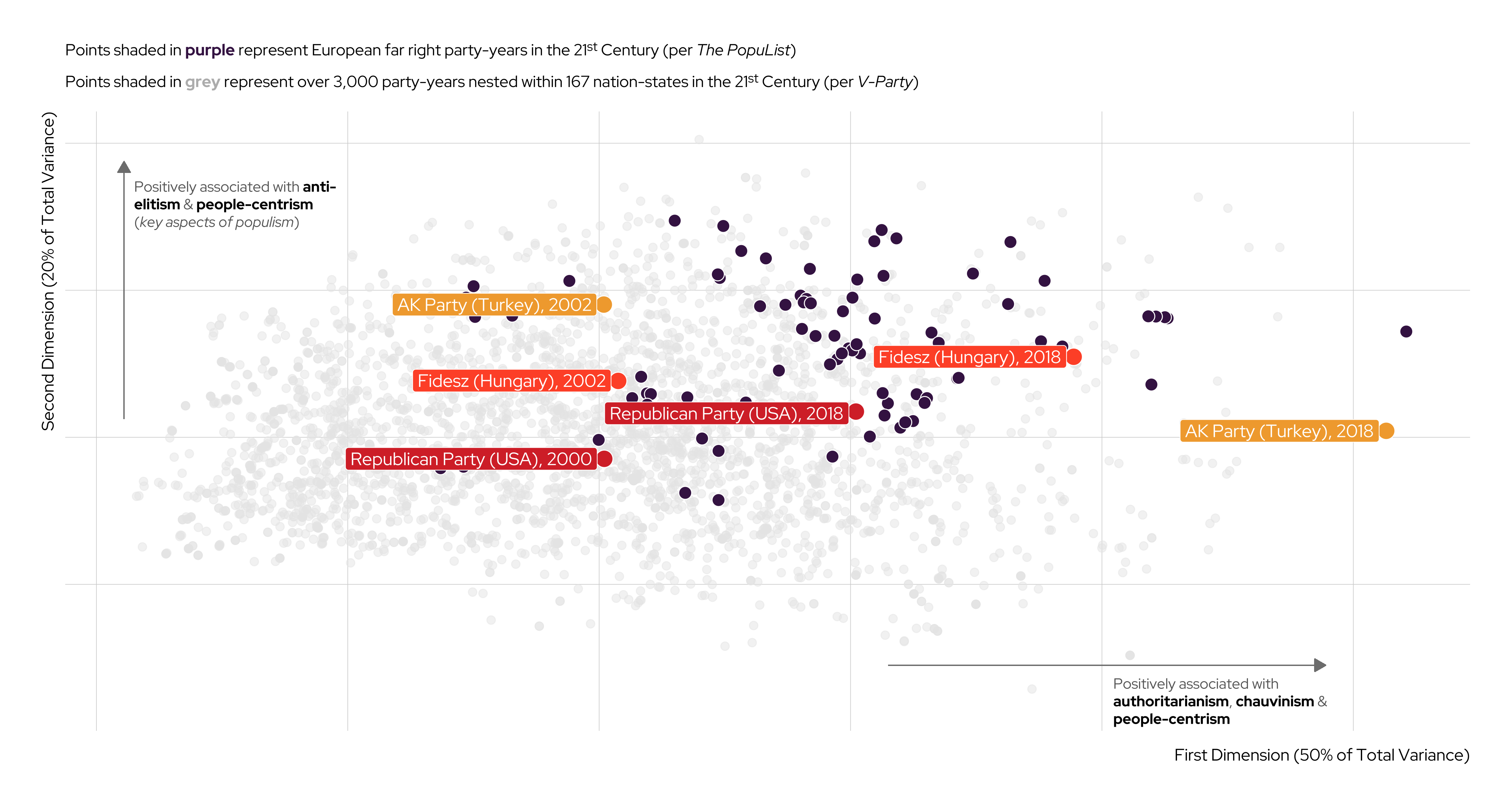
The normalization of far-right ideas, positions and frames has reconfigured party politics in the 21st century through two primary channels: (i) the emergence and legitimation of insurgent far right parties and (ii) the radicalization of parties in the political mainstream. This study investigates this latter process using data on political parties around the world and a series of machine learning algorithms. We empirically demonstrate the radicalization of prominent mainstream parties in the early 21st century and document how many have become indistinguishable from established far right parties in ways that belie their mainstream reputations and standard binary classifications that sort parties into “mainstream” or “radical” boxes. Moreover, we find that parties’ anti-immigration sentiment and cultural chauvinism are key discursive and ideological features animating radical, right-wing movements around the world, providing evidence of the centrality of ethno-nationalism in far-right politics today.
 
❧